Federal settings
U.S. DOT TRANServe materials define off-hour parking windows for weekdays and weekends in that garage environment. Weekday and weekend rules differ, and the split is set by the facility rather than the driver.
Parking help for reservations, garage access and monthly permits across the United States
+1 (844) 324-7768 Mon–Fri: 9:00 AM – 6:00 PM
Garage Access Guide
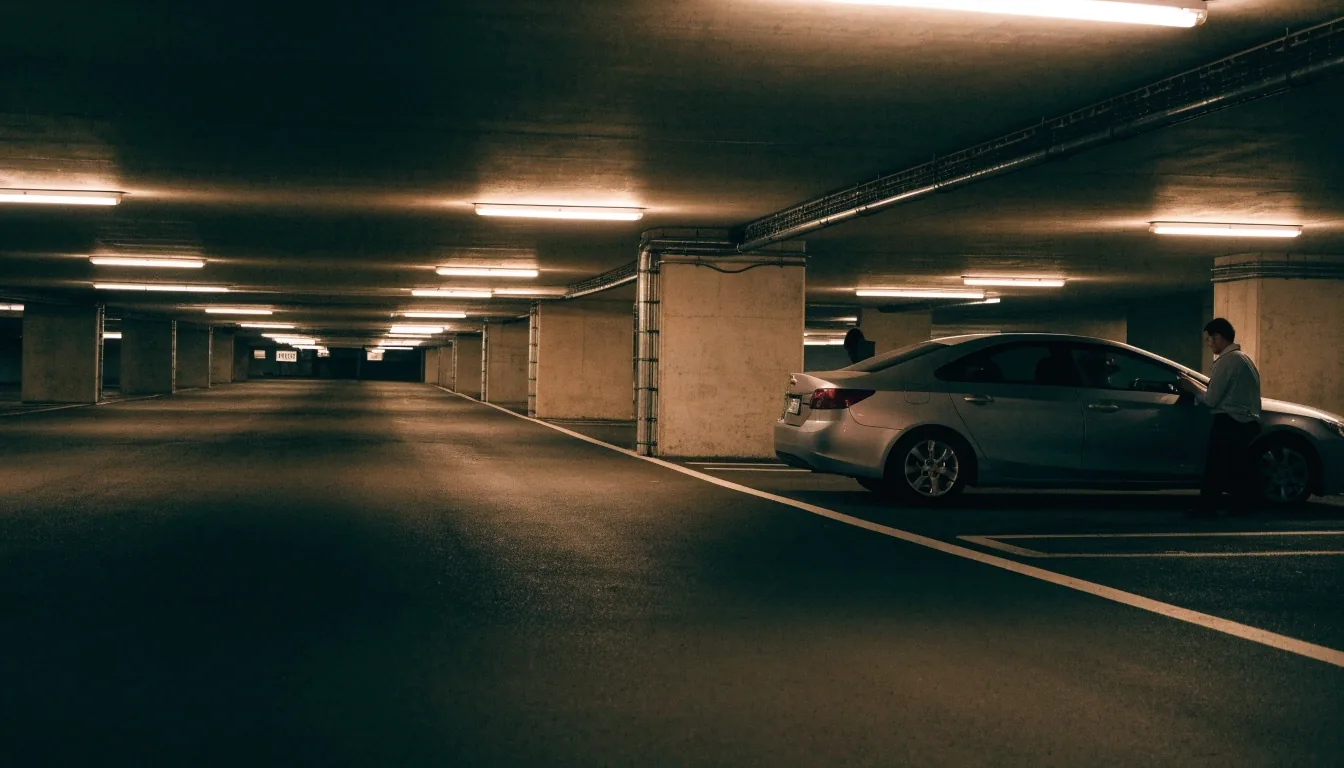
Garage access covers entry, exit, hours, and whether you can leave and return. This guide explains the mechanics and the limits, with examples from federal, municipal, and transit settings. Bring your confirmation and read the signs on your level.
Entry, exit, hours, and one booking
Most garage problems happen in the first ninety seconds: the wrong lane, a plate that does not match the booking, or a gate that reads a code it cannot see. The rest of this page walks through each of those points in the order you meet them — entrance, hours, off-hour rules, in/out privileges, permits, vehicle limits, gate failures, staffed and automated layouts, and how to exit with proof in hand.
Before the gate lifts
Large facilities have separate public, permit, and reservation entrances. Your confirmation should name the gate or lane to use. License-plate systems need the exact plate you booked. QR systems need brightness turned up and the code ready before the gate. Choosing the wrong entrance is the fastest way to need staff help.
Read the lane signage before you pull in, not while you are stopped in it. A reservation lane usually carries its own reader — a camera for plate-based bookings, a scanner for codes. Some garages run both in the same entry point and one reader is faster than the other depending on the hour. If your booking confirmation shows a plate, that is the reader you want; if it shows a code, aim for the scanner.
Access hours control everything — they decide when you may enter, when you may exit, and whether you may stay inside at all.
Access hours
Access hours state when you may enter, exit, or remain inside. Do not assume overnight access because daytime access worked. Verify the hours for your exact date.
U.S. DOT TRANServe materials define off-hour parking windows for weekdays and weekends in that garage environment. Weekday and weekend rules differ, and the split is set by the facility rather than the driver.
NYC municipal garages operate under their own reservation and access framework. Hours, permitted entry points, and monthly vs single-day access can differ from the garage next door.
Transit garages often tie access to a permit class. BART separates Daily, Monthly Reserved, and Single/Multi-day access for operational reasons, and each class carries its own entry rules.
Match your booking product to the hours you will actually be inside. An entry window that ends at 10 PM does not become later because a flight slipped — a garage does not extend its posted hours to match your schedule.
Off-hour parking
In the TRANServe garage context, off-hour parking does not require permits, while daytime and overnight rules differ. That distinction shows why time of day changes what you need to show. Your garage may use a different split, such as evening rates or weekend access cards. Check whether your product covers the hours you will actually be inside.
Off-hour access rarely means unlimited access. A garage can open its gates after a certain time and still require a valid booking, a plate on the list, or a staff check on the way out. Evenings on weekdays and weekends often run on different schedules, and a public holiday can drop the garage back to weekday rules overnight.
The practical test is simple. If you intend to leave a car inside past the end of your booking, the posted off-hour window decides whether that is allowed and whether a second charge applies. A code entry at 8 PM does not extend the booking past midnight unless the product covers it.
In and out privileges
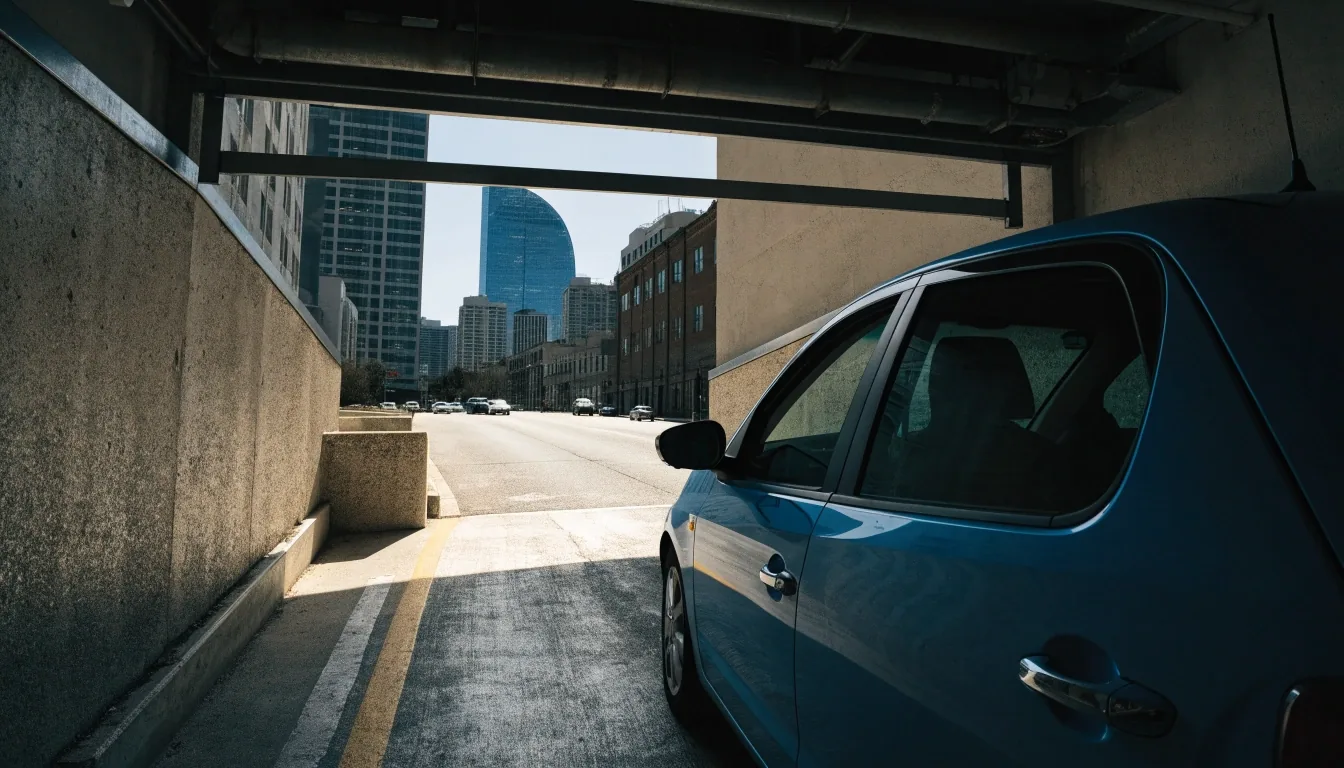
In/out access means you may exit and re-enter on the same booking. Many discounted or airport products prohibit it, because the space is resold or counted once. If the listing does not state in/out access explicitly, assume single entry. Ask the attendant before leaving if you must keep the space. A second entry without permission can count as a new stay.
The word to look for on your confirmation is explicit permission to re-enter. Anything less — an hourly rate, a flat event price, a discounted airport product — usually means one entry and one exit. If you plan to move the car for lunch and come back, verify it before you leave the garage the first time.
Permits and signage
Permit holders follow the same posted rules as other drivers for fire lanes, accessible stalls, and closures. Madison notes permit holders may park in any legal stall, with no assigned stalls, which still leaves illegal areas off limits. BART separates Daily, Monthly Reserved, and Single/Multi-day access for operational reasons. Read level signs even when you park there daily.
Vehicle and stall limits
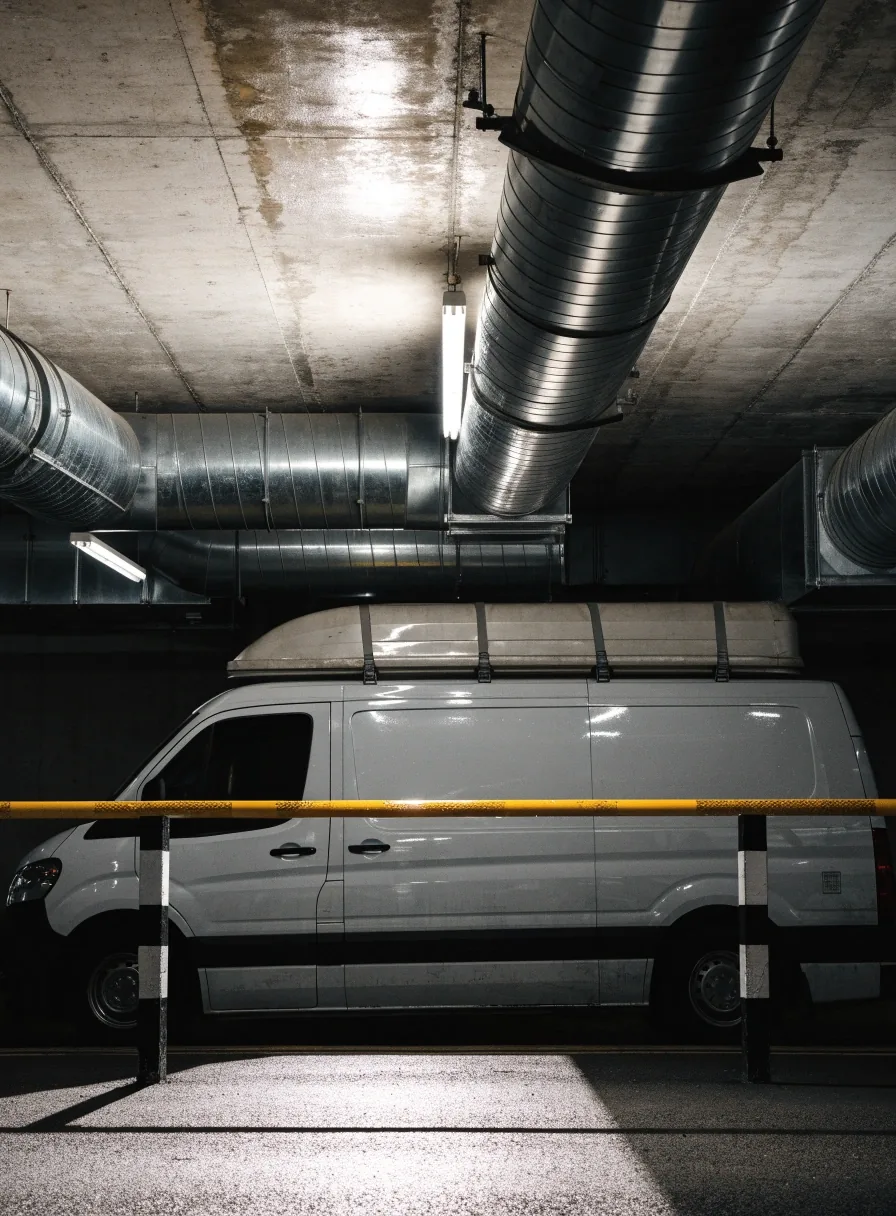
Garages restrict height, oversized vehicles, trailers, and sometimes motorcycles to specific areas. Reservation systems rarely override physical limits. Check clearance and vehicle-type lines before booking a downtown structure. If you drive a tall van or carry rooftop cargo, confirm inches, not just vehicle class. Turning around on a tight ramp wastes time.
Clearance signs usually sit at the ramp entrance and again on each level, because pipework and lighting differ. A standard sedan fits nearly everywhere; a lifted truck, a van with a roof box, or a car with a bike rack does not. Measure your total height with cargo attached — a rack can add more than a foot.
Length
Trailers and long-bed trucks rarely fit a standard stall and are often refused entry outright.
Width
Dually pickups and wide vans can block a ramp turn even when they fit the stall itself.
Motorcycles
Some garages route two-wheelers to marked areas and charge a separate product for them.
When it goes wrong
Stay in the lane, press the help button, and have your booking reference and plate ready. Contact support after you are parked, not while blocking the lane.
Do not reverse out of a blocked lane and do not tailgate another car through the gate. Both cause collisions and can flag your booking as an unpaid entry.
The intercom goes to a control room or an attendant. Have your booking reference and plate in hand so the first thirty seconds are useful.
Take a photo of the error screen or the gate sign if it is safe to do so. Note the time, because entry time can affect charges on hourly products.
Reach us once you are parked. Send the time, the plate, the booking reference, and the photo. Do it the same day — same-day reports are the easiest to resolve.
Two kinds of garage
Staffed garages can check lists, fix plate errors, and answer overnight questions on the spot. Automated garages rely on codes and cameras, so accuracy matters more. Municipal and transit facilities vary by location and hour. Plan extra time for automated entry late at night. Keep the support phone number in your phone.
Staffed garage
Automated garage
Exit
Follow exit signs for reservation or permit holders if marked separately. Keep the receipt or exit confirmation until charges settle. If you paid monthly, verify the billing date rather than assuming exit ends billing. BART bills Monthly Reserved on the 15th for the following month, which is separate from any single exit. Proof shortens any later dispute.
Receipt
Keep the exit confirmation — a photo of the gate screen works — until your card shows the final charge and no follow-up amount appears.
Monthly
Cancelling a monthly product is not the same as driving out on the last day. Check the billing date printed in your confirmation.
Time
Hourly products bill by exit time. A queue at the ramp is your time, not the garage's — check the posted timer before you commit to a slow lane.
Disputes
Save the booking email and gate photos in one place. When you contact support, one email with those items resolves more than a string of chat messages.
Downtown structures
U.S. downtown garages, including those around 125 S. Clark St. in Chicago where our support office is located, often have tight peak windows and event pricing. Read entry cutoff times for evening events. Confirm whether overnight permission changes on event nights. When visiting dense districts, book the access window that covers your full stay plus a buffer.
Event nights at theatres and arenas pull the same garages into a different product: reservations get capped, entry cutoffs move earlier, and in/out permission can be suspended for the evening. If you are heading downtown for a show, book the window that starts before your arrival and ends after the event — not the window you would pick on a normal Tuesday.
Common questions
A short set of questions we get at the help desk. If yours is not here, the support phone is the fastest path in the hours above.
Only if the reservation states in/out access explicitly. Discounted and airport products usually do not. If the page or confirmation does not say so, treat it as single entry and ask an attendant before leaving the car.
Use the staffed lane if the garage has one, and keep the booking reference to hand. If entry fails twice, press the help button rather than reversing out — the control room can raise the gate manually and correct the plate on the booking.
Not on a single-day product unless the listing says so. Overnight access is a distinct permission with its own window; check our overnight parking rules page, or check the listing before booking.
No. An off-hour entry window does not extend a booking. If you intend to stay past midnight, confirm the product covers the full window before you leave the car.
Before you drive in
Most garage access questions are answered by the confirmation and the posted rules. When they are not, our support team can check the specific facility and date with you.