Parking help for reservations, garage access and monthly permits across the United States

+1 (844) 324-7768

Spot Hero
A transit station parking structure at dusk, its upper deck lit by a single row of overhead lamps.

Transit & Municipal Parking

Transit lots and city garages run on two different rulebooks.

BART publishes one set of reserved parking rules. NYC DOT publishes another. Federal garages add a third. This comparison puts them side by side so you know which one governs the space you are about to leave your car in.

Compare the three systems

Overnight limits, monthly release windows and refund terms — read before you commit.

Know the operator

Who controls transit and city garage spaces

Transit agencies and cities run some of the most rule-driven parking in the country. A reserved space under a station platform and a municipal garage stall ten minutes walk from city hall can sit in different jurisdictions, follow different release calendars and answer overnight questions in opposite ways.

This comparison explains BART reserved parking alongside New York City municipal systems and federal garage guidance, so you can tell which rules apply to your trip. The three things worth pinning down before you park are release timing, overnight limits and refund terms — everything else follows from those.

Transit authority
Station-side reserved parking sold by the rail operator — BART is the example on this page.
Municipal system
City-run garages, lots and parking fields, sold through a reservation portal — NYC DOT is the example here.
Controlled-access garage
A facility with permits, off-hour windows and prior approval for anything unusual — U.S. DOT TRANServe shows the pattern.

Two systems, two goals — and the rulebook changes with the curb you parked beside.

Transit parking serves commuters catching trains. Municipal garages serve residents, workers and visitors near city facilities. Same city, sometimes the same block, different answer when you ask about overnight.

Overnight, billing, refunds

Three operators, three answers to the same question

The fastest way to pick the wrong product is to assume a general city rule overrides the product you actually bought. Match the overnight answer to your exact ticket, every time.

BART

Transit reserved parking

Overnight permission
Continuous overnights are allowed only on Single/Multi-day, up to 20 paid weekdays. Daily and Monthly Reserved are not continuous-stay products.
Billing cadence
Monthly Reserved is billed on the 15th for the following month.
Refund terms
Monthly Reserved can be canceled at any time, with a pro-rated refund processed within 72 business hours.
What you book
Daily, Monthly Reserved, or Single/Multi-day — picked by stay pattern, not by price alone.

NYC DOT

Municipal garages & fields

Overnight permission
Municipal parking fields do not allow overnight parking. Reservation-system garages are the bookable product for anything beyond a day.
Billing cadence
Monthly parking is tied to the release window rather than a mid-cycle invoice date.
Refund terms
The system focuses on the first-come, first-served release window; released spaces may reappear later.
What you book
A reservation at a municipal garage through the city's Parking Reservation System.

TRANServe

Controlled-access garage

Overnight permission
No vehicles should remain overnight without prior approval. Off-hour parking inside the defined windows is separate from that.
Billing cadence
Access is governed by permits and approvals rather than a consumer billing cycle.
Refund terms
Approvals and permits are the mechanism, not consumer refunds.
What you book
Permitted access with weekday and weekend off-hour windows defined by the facility.
A commuter walking past the painted stall line of a reserved parking bay beneath a transit platform.

Pick by stay pattern

Three BART products, chosen by how long the car sits there

BART publishes a live Reserved Parking FAQ covering Daily, Monthly Reserved and Single/Multi-day parking. The FAQ separates them on one criterion: whether the vehicle leaves each day or stays put.

Daily

For commute days. You arrive in the morning, you drive home the same evening, and nothing about the vehicle stays behind. The right product when the station is a fallback, not a home base.

Monthly Reserved

For regular riders who use the same space on most working days. Billing lands on the 15th for the following month, and the reservation can be canceled at any time with a pro-rated refund within 72 business hours.

Single / Multi-day

The only BART option that permits leaving a vehicle continuously, including overnights, for up to 20 paid weekdays. If your trip means the car stays while you travel, this is the one to book.

Timing beats price

The NYC monthly reservation window opens five days before the first

NYC DOT states reservations are first-come, first-served for upcoming-month parking, with the window opening five days before the first of the month at 10 a.m. The system covers municipal garages across New York City.

Demand spikes right at release for busy locations — the kind of garage where a commuter has been circling the same block for ten minutes. Log in early with vehicle and payment details already saved. A checkout that stalls on a missing plate number is how a space disappears. If you miss the window, check back: spaces get released when previous holders drop them.

Blocks apart, opposite rules

A municipal field is not a municipal garage

Municipal field

No overnight parking.

NYC DOT states municipal parking fields do not allow overnight parking. A field is a surface lot, usually priced for the day, and it closes the question at night regardless of what your month looked like.

Municipal garage

Reservable through the city system.

The Parking Reservation System lets the public reserve spaces at municipal garages. That contrast matters in dense neighborhoods where fields and garages sit blocks apart — same trip, two different answers about the car staying out.

Book the garage product when you need reservation access. Do not park overnight in a field just because the garage was full — that is the mistake the two-line distinction is meant to prevent, and it ends in a ticket rather than a space.

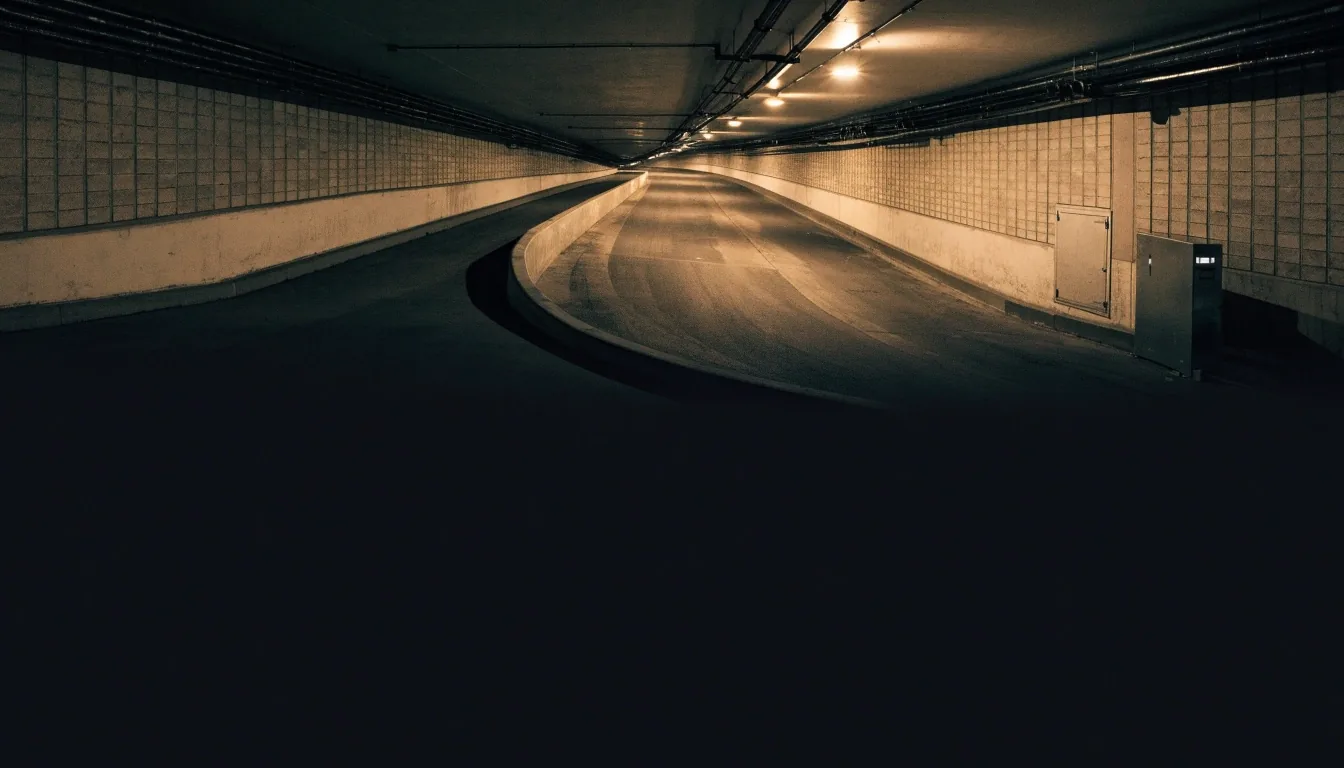
An access-controlled garage entrance at night seen from inside, ramp curving downward beneath overhead lighting.

Time-based tiers

What a controlled-access garage teaches you about your city garage

U.S. DOT TRANServe guidance describes garage access and off-hour parking for a federal facility. It is not a consumer parking product, and that is precisely what makes it useful: the layers are visible.

Off-hour windows

The guidance defines separate off-hour windows for weekdays and for weekends, so access hours are a published fact rather than a guess at the gate.

No permit required

Off-hour parking in the defined windows does not require permits. The hours themselves are the permission.

Prior approval

No vehicles should remain overnight without prior approval. Leaving the car is a request, not a default.

Your transit or city garage may use similar time-based tiers without calling them that. Once you start reading a facility as windows plus approvals, the posted rules stop looking arbitrary and start reading like a schedule — which is what they are.

Relief from timing

Put both dates in your calendar

Timing mistakes cost more than price differences. A BART rider who forgets the 15th pays for a month they no longer commute. An NYC rider who logs in on the second of the month finds the garage full.

  1. 15

    BART monthly billing date

    Monthly Reserved bills on the 15th for the following month. If your commute changes, cancel early rather than let the charge land — the pro-rated refund is easier to claim against an intended charge than a forgotten one.

  2. 10 a.m.

    NYC release moment

    The monthly release opens at 10 a.m., five days before the first of the month. Set the alarm for a few minutes before and log in early with details saved.

  3. Day 20

    BART continuous-stay cap

    Single/Multi-day allows up to 20 paid weekdays of continuous parking. Count the working days the car will sit there before you leave it, not the calendar days.

  4. Before leaving

    Confirm the cap on airport-adjacent transit stays

    A station near an airport attracts long stays. Confirm the continuous-stay cap before you park rather than on the day you come back to a notice on the windshield.

What experienced riders check

Four sentences a good listing will state plainly

Experienced riders favor listings that name access hours, in-and-out rules, overnight permission and refund timing in plain sentences. Vague phrases without deadlines get skipped — and rightly so.

Access hours
When the garage or field is open, in the facility's own hours — not "24/7 access available" with an asterisk underneath.
In and out rules
Whether you can leave and re-enter during the stay. A reserved space that traps the car is a different product from one that lets you run an errand.
Overnight permission
Stated for the exact product, not for the city in general. Fields ban it, BART Single/Multi-day allows it, federal garages require prior approval.
Refund timing
When the money comes back and under what condition. "Cancel anytime" without a processing window is half an answer.

One more check

Ask whether "monthly parking" means any legal stall — as it does in Madison — or a distinct reserved product, as it does with BART Monthly Reserved. Specificity predicts fewer disputes. Choose the listing that answers all four of the questions above.

Money terms

Read the billing rules before you hand over a card

Billing and refunds compared across the three systems read differently in each direction. BART is the only one on this page with consumer refund language; the other two put the decision earlier, at the point of access.

BART Monthly Reserved

Pro-rated, on request

Can be canceled at any time with a pro-rated refund within 72 business hours. Billing lands on the 15th for the next month. Save every receipt — a refund you cannot date is a refund you cannot chase.

NYC municipal monthly

Released, not refunded

The system focuses on the first-come, first-served release window rather than mid-cycle refunds. Your money question happens at the start of the month, when the space is won or lost — not at the end of it.

Federal garage settings

Permits and approvals

Federal settings focus on permits and approvals rather than consumer refunds. Approval is the currency: get it in writing before the car stays overnight.

Getting started

Five steps from the street to the right product

The order matters: naming the operator first narrows everything after it. Skipping straight to a search box is how a commuter ends up comparing a municipal field against a BART reserved bay.

  1. 1

    Name the operator

    Identify whether your station or neighborhood uses transit, municipal garage, or municipal field rules. The label on the sign is the first clue.

  2. 2

    Open the official FAQ for that system

    BART's Reserved Parking FAQ, the city's reservation portal, or the facility's own access guidance. Confirm overnight and billing lines in the source, not in a forum.

  3. 3

    Pick the product that matches the stay

    Continuous versus daily use is the deciding question. Continuous means Single/Multi-day or a municipal garage reservation; daily means a commute product.

  4. 4

    Keep the paperwork together

    Confirmation, approval letters and refund receipts in one place. If a dispute starts, the paper trail is the argument.

  5. 5

    Ask before you guess

    Contact support if the facility mapping is unclear. A two-minute question costs less than a night in the wrong lot — or a ticket on a windshield you did not plan for.

Questions commuters ask

The answers that change a booking

Five questions that decide which rulebook applies to a specific car, in a specific space, on a specific night.

Can I leave a car overnight in a BART reserved space?

Only on Single/Multi-day, which permits continuous parking including overnights for up to 20 paid weekdays. Daily and Monthly Reserved are commute products, not continuous-stay products, so an overnight on either is outside what was sold.

Do NYC municipal fields allow overnight parking?

No. NYC DOT states municipal parking fields do not allow overnight parking. If your trip needs the car to stay out, book through the Parking Reservation System at a municipal garage rather than parking in a field on the assumption that the two are the same thing.

When exactly does the NYC monthly window open?

Five days before the first of the month, at 10 a.m., first-come, first-served. Busy locations can fill within minutes, which is why having your plate and payment details saved before the clock starts matters more than the price difference between garages.

How does the BART monthly refund work if my commute changes?

Monthly Reserved can be canceled at any time with a pro-rated refund processed within 72 business hours. Because billing lands on the 15th for the following month, canceling before that date avoids charging a month you will not use.

What does "monthly parking" actually buy?

It depends on the operator. In Madison, monthly can mean any legal stall. With BART, Monthly Reserved is a distinct reserved product with its own billing date and refund terms. The word is the same; the product is not — read the definition before comparing prices.

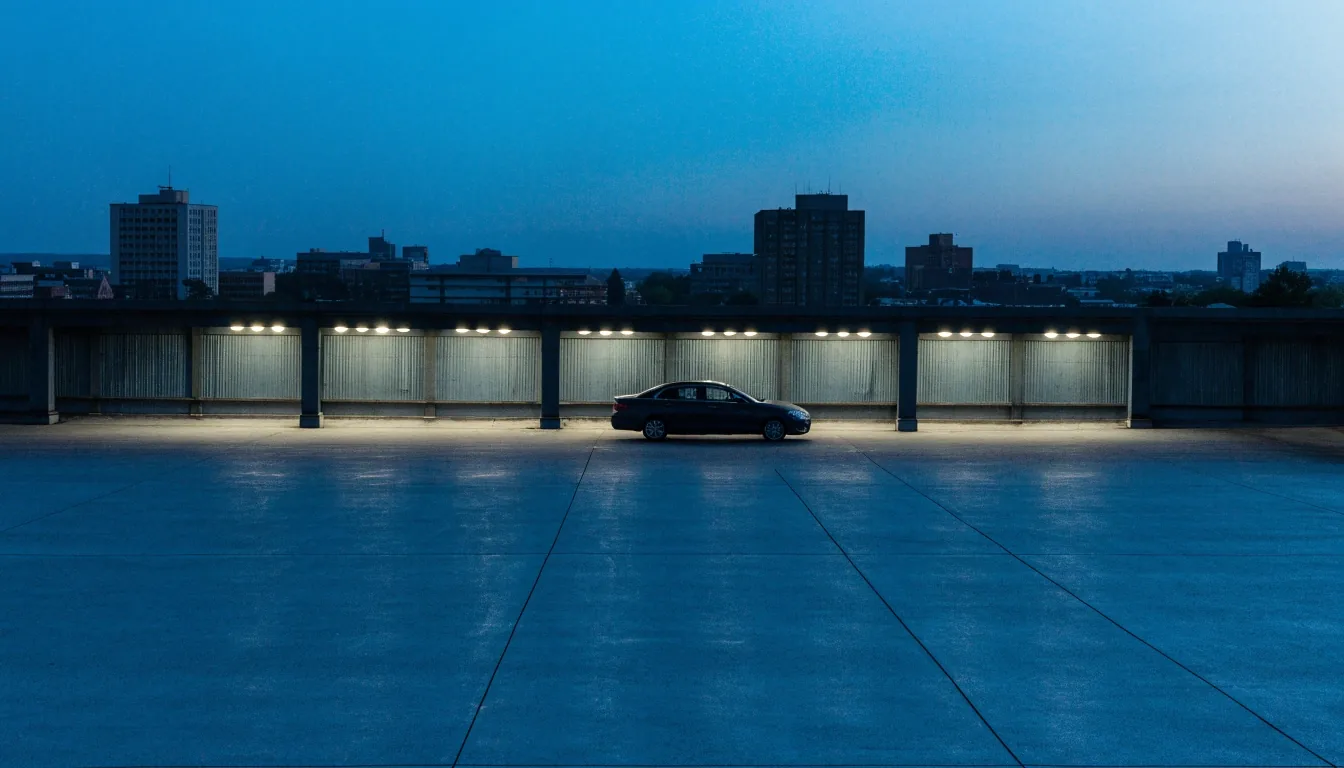
A city municipal garage at blue hour seen from the rooftop level, one car parked beneath a row of lit fixtures.

Before you park

One operator, one rulebook, one product

The comparisons on this page cover BART, New York City municipal systems and federal garage guidance. If your facility is none of those three, the same three questions still find the answer: who runs it, what does the product allow overnight, and when does the money come back.

SpotHero Help Center publishes plain-language parking guidance for travelers and commuters in the United States. Support hours are Monday to Friday, 9:00 a.m. to 6:00 p.m. Reach us at [email protected] or +1 (844) 324-7768, or write to 125 S. Clark St., Suite 1300, Chicago, IL 60603.